
Articles
Plant based meat: Market Insights
Plant based meat: Market Insights
Plant based meat: Market Insights
Plant-Based Meat Market Insights: Innovation, Expansion, and Technology Convergence
The plant-based meat industry continues to evolve from a niche consumer trend into a globally integrated food technology sector. Driven by sustainability goals, food security concerns, and rapid advances in bioengineering, the market is witnessing expansion across geographies, ingredient systems, and retail ecosystems. Recent developments from key players highlight how production scaling, molecular innovation, and retail adoption are reshaping the competitive landscape.
Ingredient Innovation: The Shift Toward Bio-Identical Meat Flavor Systems
One of the most transformative areas in plant-based meat is the development of heme analogs and alternative protein-binding molecules that replicate the taste and aroma of animal meat.
Impossible Foods has pioneered the use of soy-derived heme (leghemoglobin) to create meat-like flavor profiles, most notably in its flagship burger product. This innovation has inspired parallel research across biotech startups and academic institutions.
Meanwhile, San Diego-based Triton Algae Innovations is developing a production platform that uses algae-based systems to produce heme-like compounds without genetic engineering. This non-GMO positioning is particularly attractive for brands targeting clean-label and natural-product consumers, especially in Europe and parts of Asia.
The convergence of algae biotechnology and plant-based protein engineering suggests a shift toward alternative expression systems that move beyond traditional crop-derived inputs.

Beyond Meat has signed an agreement with Jiaxing Economic & Technological Development Zone (JXEDZ) to design and develop manufacturing facilities in the JXEDZ, including a state-of-the-art production facility to manufacture plant-based meat products including beef, pork and chicken under the Beyond Meat brand in China.
Coverage in more than 10 countries including Europe, USA, Australia, China.
Triton Algae Innovations - a San Diego-based firm is building a production platform for food proteins from algae. The company cites that it can produce heme (the red, meaty-tasting star ingredient in the Impossible Burger) without using genetic engineering, generating significant interest from plant-based meat brands seeking a Non GMO positioning.

Starbucks is targeting eco-conscious consumers by rolling out more plant-based offerings in selected stores across Asia. The plant-based range includes products from meat substitute giants Impossible Foods and Beyond Meat as well as Swedish vegan brand Oatly. The move is part of the coffee giants’ plant-based focus which continues to expand in global markets.
Patent Landscape and Geographic Distribution
The intellectual property footprint of plant-based meat technologies demonstrates a highly internationalized innovation network:
- 21% of patent activity is concentrated in the United States
- 13% in Europe (EP jurisdiction)
- 10% in China
- 11% in Australia
- 35% distributed across Japan, Russia, Canada, South Korea, Mexico, Brazil, and Hong Kong
- 10% under PCT (Patent Cooperation Treaty) applications
Technology Trend
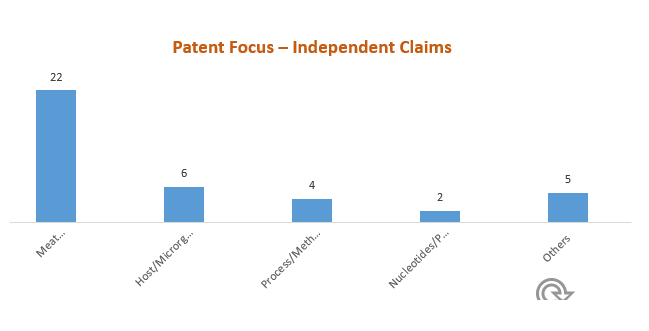
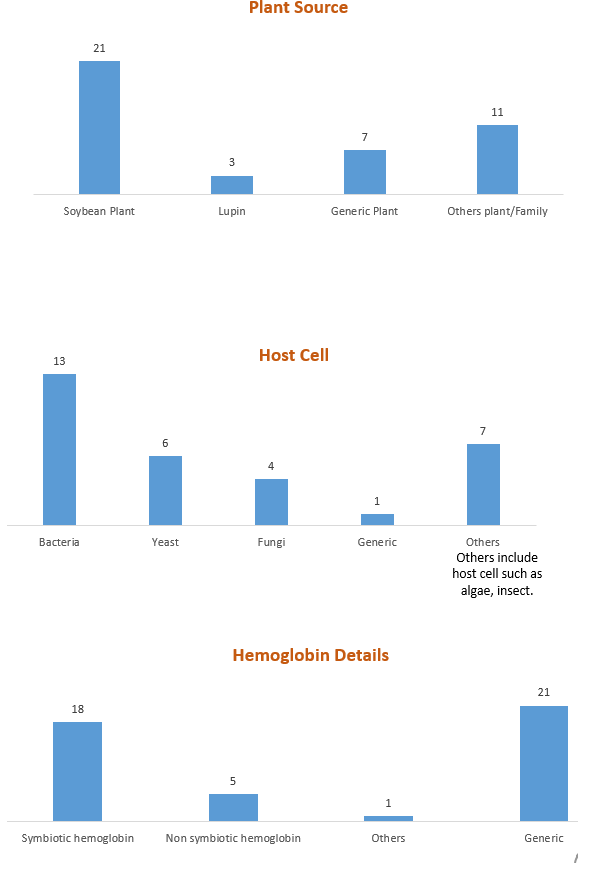
Insights:
- Leghemoglobin as a symbiotic hemoglobin is mainly produced from soybean.
- Non-symbiotic hemoglobin is produced from variety of sources like Sugar Beet, Barley, Legumes, Pea, Cowpea, Corn.
- Impossible Foods and Max Planck Institute are working on Lupin plant source for hemoglobin production.
- Algenol Biotech, Biosyntia Aps, Pando Nutrition, Weifang Elbe Special Health Food, Beijing Northern Genetics Biological Tech claims dietary supplements containing hemoglobin or iron-rich nutritional supplements from plant source.
Solutions Driving Innovation & Intelligence


Enabling Fortune 500's, R&D Giants, Law firms, Universities, Research institutes & SME's Around The Globe Gather Intelligence That
Protects and Nurtures Innovation Through a Team of 250+ Techno Legal Professionals.