
Articles
Alternatives to 6PPD Key Players and their Methods
Alternatives to 6PPD Key Players and their Methods

Rubber composition with longer lasting antiozonation
The recommendation discusses the method described a rubber composition featuring enhanced resistance to ozone degradation includes a substituted hydroxyl-phenyl-p-(hydroxy)phenylenediamine. This composition is especially effective for rubber products, offering extended protection against ozone damage by minimizing migration through the rubber and reducing the loss of the antiozonant. Further, the synthesis and characterization of 4-(4- (dimethylamino)phenylimino)cyclohexa-2,5-dienone, denoted as dPAQI, significant to note that the ring of the dimethyl-p-phenylamine-quinoneimine to which the oxygen is double bonded is no longer an aromatic ring. It is anticipated that the product of ozonation of this molecule should be different than 6PPD-quinone and therefore may have a different toxicity' effect to the soho salmon. The invention pertains to rubber compositions, with a specific focus on tire rubber formulations that offer enhanced resistance to ozone degradation. Notably, these formulations achieve superior antiozonation performance without relying on 6PPD. Additionally, in comparison to the commonly used 6PPD, dPPD-OH (4-(4-(dimethylamino)phenylamino)phenol), which serves as a model for sPPD-OH, and dPAQI (4-(4-(dimethylamino)phenylimino)cyclohexa-2,5-dienone), which serves as a model for sPADI, not only offer similar initial antiozonation performance but also provide significantly enhanced long-term antiozonation durability in a rubber formulation.
This example of innovation underscores the potential for strategically designing the next generation of antidegradant chemicals.
Summary of the Solution
The solution to the problem is proposed by MICHELIN & CIE
Technology Provider: MICHELIN & CIE
Alternative Preservative:
An antidegradant used in the composition
(I) hydroxylated form of substituted phenyl-p- phenylenediamine, sPPD-OH
(II) quinoneimine form of substituted p- (hydroxy)phenyl amine, sPAQI
Benefits of Alternative Preservative
- dPAQI, oxygen is double bonded is no longer an aromatic ring and therefore may have a different toxicity' effect to the soho salmon
- Enhanced resistance to ozone degradation
- Enhanced long-term antiozonation durability in a rubber formulation
- Ozone cracking index indicates a slower migration
Safety/Regulatory Information: NA
Alternative Preservative
A rubber composition having improved antiozonation performance comprising a substituted hydroxyl-phenyl-p-(hydroxy)phenylenediamine. Such a composition is particularly suitable for rubber articles.
As described above, dPPD-OH, denoted for 4-(4-(dimethylamino)phenylamino)phenol, a model molecule for sPPD-OH, and dPAQI, denoted for 4-(4-(dimethylamino)phenylimino)cyclohexa-2,5-dienone, a model molecule for sPADI, provided not only comparable initial antiozonation performances, but also significantly improved longevity for antiozonation performances in a rubber formulation.
Significant to note that the ring of the dimethyl-p-phenylamine-quinoneimine to which the oxygen is double bonded is no longer an aromatic ring. It is anticipated that the product of ozonation of this molecule should be different than 6PPD-quinone and therefore may have a different toxicity' effect to the soho salmon.
Production of a “composite” ozone sample
First phase or ''non-productive" phase:
Includes thoroughly mixing, typically by kneading, the various ingredients of the composition but excluding some of the vulcanization agents, the accelerators, and the retarders.
Kneading is carried out in an internal mixer of the Banbury type at a maximum temperature of generally between 120°C and 190°C is reached.
Second phase or '‘Productive" phase:
Incorporating some of the aforementioned vulcanization system that were not added in the “non-productive” phase, including the vulcanization agents, the accelerators, and the retarders.
It is performed for an appropriate time (typically, for example, between 1 and 30 minutes or between 2 and 10 minutes), and at a sufficiently lower temperature, i.e., lower than the vulcanization temperature of the mixture, so as to protect against premature vulcanization.
Composite Ozone Sample
A “base formulation” 30 without any antiozonant and a “comparative formulation” 20 with a specific antiozonant 40, 42 at a specified loading are made separately according to the procedures described above and shown in FIG. 1.
Then, a “composite” ozone sample 10, as shown in FIG. 1 , is prepared by sheeting the “base formulation” 30 (which has no antiozonant) into a 2.5mm thick skim 32 and a “comparative formulation” 20 (which contains an antiozonant) into a 0.5 mm thick skim 22, stacking the “comparative formulation” skim on top of the “base formulation” skim to make a “composite”.
The “composite” sample is then cured at specified conditions, and purposely left at ambient condition for 14 days. The sample is then stapled/looped on a rod, making sure that tlie “comparative formulation” is facing outside on the loop.
NMR analysis of sPPD-OH and sPAQI
Example 3: This example demonstrates the anti-ozone performances of the new chemicals in this invention at static and dynamic conditions.
Ozone cracking indices
- Table 3 illustrates the static and dynamic ozone cracking indices for formulations containing 1.2 phr of 6PPD, dPPD-OH, and dPAQI, with the rubber samples being cured for 15 minutes at 150°C before testing.
- The data reveal that both dPPD-OH and dPAQI provide antiozonation performance comparable to that of the widely used 6PPD, as shown by their similar ozone cracking indices under static and dynamic conditions.
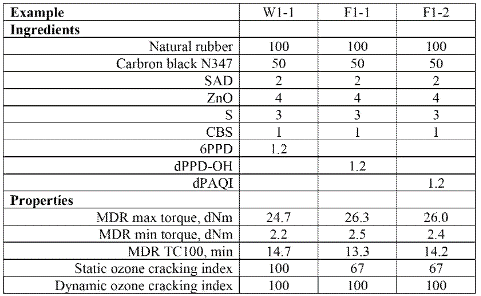
Table 3 Static and dynamic ozone cracking indices in non-oil formulations
Example 4: This example demonstrates the superior antiozonation longevity of this invention using the aforementioned composite migration test.
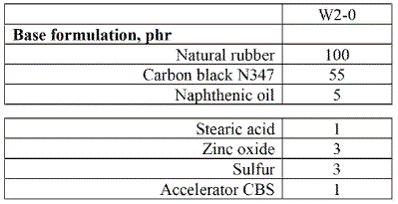
Table 4 Oil-containing “base formulation”
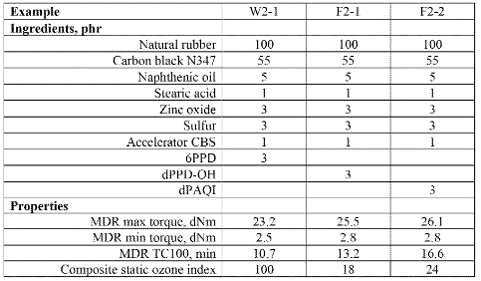
Table 5. Comparative formulations and test properties
Ozone cracking indices
Table 5 showed the formulas and the test results of the “comparative formulations”, where the composite ozone samples were cured for 20 minutes at 150°C.
As can be seen, the cracking indices, 18 and 24 for the dPPH-OH and the dPAQI formulations, respectively, of this invention were significantly lower than 100 for the widely used 6PPD formulation. These relative values of composite ozone cracking indices indicated that the chemicals from this invention will provide longer ozone protection of the rubbers than the widely used 6PPD.
Advantages of Michelin & CIE for Alternative of 6PPD
6PPD
- 6PPD is an antioxidant and antiozonant that helps prevent the degradation and cracking of rubber compounds caused by exposure to oxygen, ozone and temperature fluctuation.
- 6PPD is used industry-wide to help tyres resist degradation and cracking, which is vital for driver and passenger safety.
- The challenge arises for the wider tyre industry in that tyre wear dust containing 6PPD, is washed into the waterways and there is some evidence linking 6PPD-Quinone (a derivative developing from 6PPD)with the death of Coho salmon.
Advantages
- Enhanced Ozone Resistance in Rubber Compositions: This invention features a rubber composition incorporating a substituted hydroxyl-phenyl-p-(hydroxy)phenylenediamine, which significantly improves resistance to ozone degradation. The formulation minimizes antiozonant migration and loss, offering superior protection for tire rubber applications without the use of 6PPD.
- dpaq1 Compound: The invention includes the synthesis and characterization of 4-(4-(dimethylamino)phenylimino)cyclohexa-2,5-dienone (dPAQI). Unlike 6PPD-quinone, dPAQI's structure lacks an aromatic ring, which could result in different ozonation products and potentially impact toxicity, including effects on the soho salmon.
- Superior Long-Term Antiozonation Performance: dPPD-OH and dPAQI, as alternatives to 6PPD, not only match its initial antiozonation performance but also offer significantly better long-term durability. This advancement ensures enhanced ozone protection for rubber products, especially in tire formulations.
Read Also: Alternatives to 6PPD Overview
Graphene
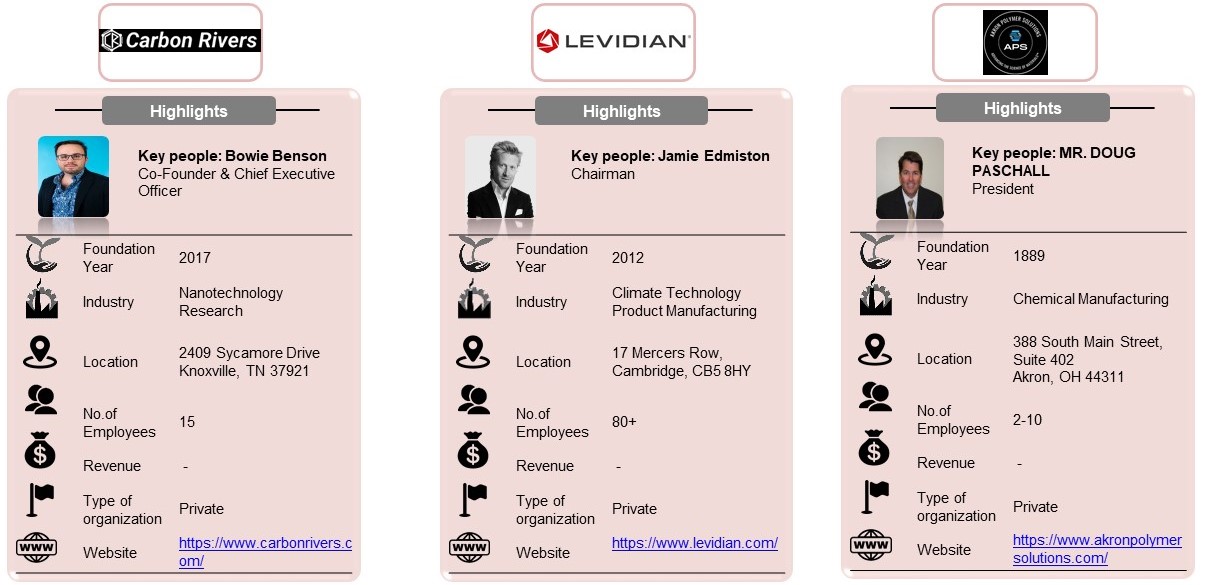
The search for safer alternatives to 6-PPD in tires has led researchers to explore the potential of graphene as a replacement. Known for its remarkable strength, flexibility, and conductivity, graphene could enhance the mechanical properties of rubber, offering comparable or superior protective benefits while mitigating environmental concerns. Start-ups like Carbon Rivers and Levidian are at the forefront of this innovation, investigating graphene's use in tire applications. Additionally, several patents have been filed for graphene as an additive in tire sidewalls, highlighting the growing interest and investment in this area. As research advances, graphene holds promise for transforming tire technology and addressing the ecological challenges associated with traditional 6-PPD additives.
Summary of the Solution
The solution to the problem is proposed by Carbon Rivers, Levidian and Akron Polymer Solutions Inc
US11753529B2 Published in 2023
Technology Provider:
- Carbon Rivers
- Levidian
- Akron Polymer Solutio
Alternative Preservative: Graphene
Benefits of Alternative Preservative:
The addition of graphene to tire sidewall compounds can extend the life and performance of the sidewall. Graphene is non-staining and is persistent (i.e., the graphene stays in the compound and in the tire). Graphene can function as an antioxidant and antiozonant, all while having no trade off or loss in basic mechanical properties, processing, or vulcanization kinetics.
Safety/Regulatory Information: No known toxicity
Alternative Preservative
- Carbon Rivers, based in Knoxville, Tennessee, believes that incorporating graphene nanoflakes into tires could replace most or all of the 6PPD and reduce emissions by 28%.
- Graphene in polymer nanocomposites has been reported to contain many attributes such as antioxidant properties, thermal conductivity, electrical conductivity, and reduction in permeability.
- In addition to the thermal properties of graphene, it is reported to show the following properties: electrical conductivity, odorless and no known toxicity, inert, and in polymer composites, demonstrates impermeability.
- Levidian’s LOOP technology uses methane to produce clean hydrogen and net zero graphene - the thinnest, strongest and most versatile material ever discovered.
Graphene-Introduction
Graphene Physicall Properties
The particle size range of graphene used in the present teachings can range from about 50 nm to about 10 μm.
Specific surface area of the graphene plate will range from 100 m2/gram to 250 m2/gram and in one aspect is about 180 m2/gram.
Graphene in Rubber Formulation
Graphene is added to the rubber compound formulations at between about 0.0 PHR and about 50.00 PHR, including in the range of about 0.5 PHR to about 8.00 PHR..
Benefits of Using Graphene in Rubber
The graphene can function as a barrier.
The graphene exfoliates into sheets when added to the rubber compound, which improves the barrier properties when perpendicular alignment to the sheet direction is achieved.
The graphene plates provide a barrier to oxygen and nitrogen migration, and moisture or water vapor molecules migrating through the liner compound of the tire or other product requiring such properties.
Test Methods used for Measurement of Properties of Rubber Compositions
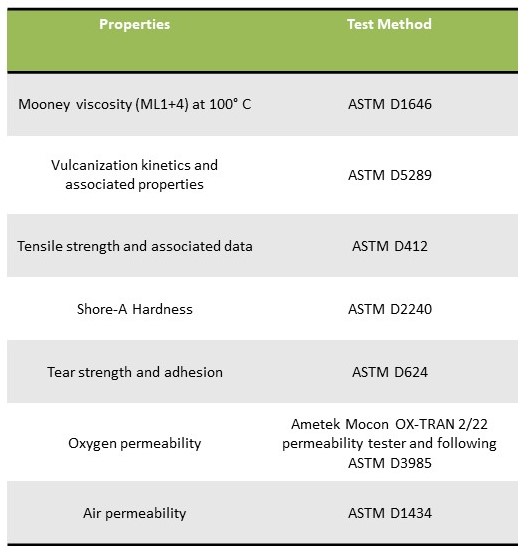
Example-1
Tire model innerliner compounds were prepared containing graphene levels, ranging from about 0.00 PHR to about 20.00 PHR
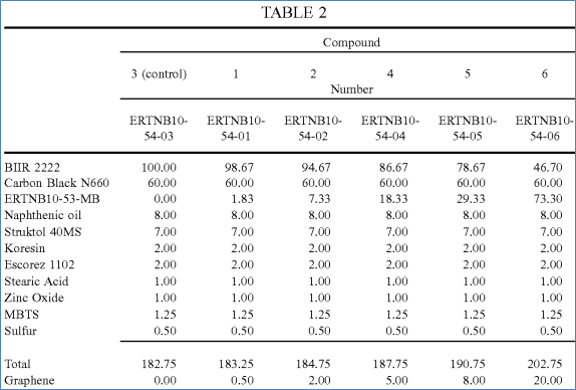
Example-1-Preparation
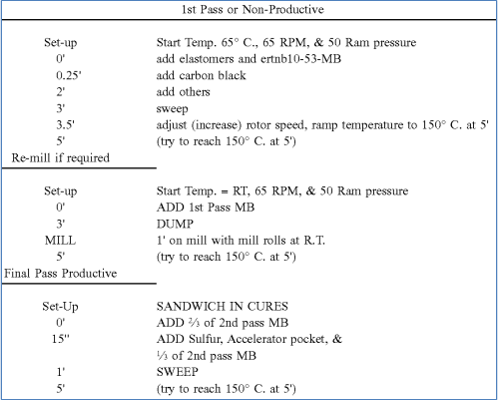
Example-1- Result
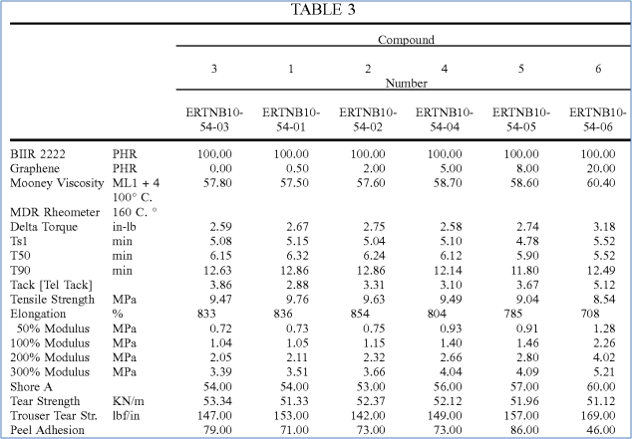
The mechanical properties illustrated in Table 3 are equivalent to innerliners with no graphene. There is no shift in tensile strength, Mooney viscosity, modulus, tack, green strength, or tear strength. However, there is direction improvement in adhesion, consistent with results from other compound classes.
Example-2
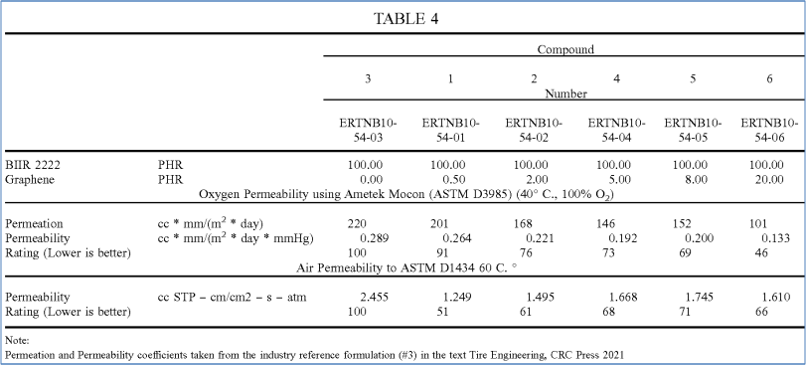
Advantages of Graphene
- The addition of graphene to tire sidewall compounds can extend the life and performance of the sidewall. Graphene is non-staining and is persistent (i.e., the graphene stays in the compound and in the tire). Graphene can function as an antioxidant and antiozonant, all while having no trade off or loss in basic mechanical properties, processing, or vulcanization kinetics.
- In one aspect of the present teaching, graphene can be used to replace 6PPD.
SMITHERS
6PPD Alternative Development
Smithers global team of testing experts can design and conduct integrated studies and custom testing protocols to get you the answers you need as you strive to find solutions. Their services range from material chemistry and whole product testing to environmental fate and toxicology studies.
Implementing a solution to the 6PPD challenge starts with finding a suitable alternative that serves the same function and complements the other compounds in a tire formulation without altering performance.
Material Chemistry and Physical Properties Testing
- Smithers is proud to offer comprehensive material chemistry and physical properties testing capabilities to support a thorough understanding of every available alternative.
- Services include qualitative and quantitative composition analysis of anti-degradant materials and rubber specimens, including samples excised from tires.
- Testing capabilities encompass product qualification, property assessments of alternative anti-degradants, performance and benchmarking evaluations for various types and loadings of anti-degradants, and regulatory compliance.
Product Testing & Validation
- Smithers has been an integral part of the tire industry since 1925 and offers whole tire testing on multiple continents.
- The global tire testing laboratories are equipped for a wide range of performance, durability, and regulatory tests, on rigs and on vehicles.
- The capabilities include accelerated aging, benchmarking, indoor tread wear, and traction testing on dry, wet, snow, and ice surfaces. They also offer dynamic ozone exposure testing on both tread samples and whole tires.
Environmental Fate & Ecotoxicology
- Smithers offers standardized and custom environmental studies at our laboratories in the United States and United Kingdom.
- The experts design environmental fate, environmental metabolism, and ecotoxicology studies for investigating the overall effects of tire particulates on the environment and specific flora and fauna populations.
- The team is equipped for both laboratory and field-based studies to ensure a comprehensive understanding of the impacts of compounds on the environment.
Ozone Exposure
- 6PPD-quinone is the product of ozone exposure, understanding the relationship between alternative materials and ozone is vital to identifying a suitable alternative to 6PPD.
- Smithers can recreate a wide range of ozone exposure conditions in a laboratory setting in order to study how compounds, excised samples, whole tires, and antiozonant packages react to different concentrations. Samples can be subjected to static or dynamic strain while under test.
Sample Prep
- The sample prep team has mastered a wide range of sample preparation techniques, so our clients choose from a number of testing strategies.
- The methods include abrasion protocols that mimic a variety of road surfaces, tread removal, and sample cutting.
Extractable Testing
The laboratories are outfitted with sophisticated instrumentation to detect trace amounts of volatile, semi-volatile, non-volatile, and elemental impurities.
Summary
For nearly 100 years, Smithers has been providing accurate data, on time, with high touch to our clients. Founded in 1925 and headquartered in Akron, Ohio, Smithers is a multinational provider of testing, consulting, information, and compliance services. With laboratories and operations in North America, Europe, and Asia, Smithers supports customers in several industries essential to human lives.
Highlights
Key People: Michael Hochschwender, Chief Executive Officer
Foundation Year: 1925
Industry: Composites
Location: 121 S. Main Street, Suite 300, Akron, OH 44308, USA
No. of Employees: 788
Type of organization: Public
Website: https://www.smithers.com/home
Company Information
Since 1925, the experts at Smithers have delivered independent laboratory testing and material analysis for tires and wheels of virtually every type. In addition, our market and technical consulting support the industry's toughest challenges.
Smithers recognizes the importance and legislative demands for tire and wheel manufacturers and assists with independent testing to understand construction, material selection and performance expectations. Our tire and wheel testing labs conduct a wide variety of durability and performance tests supported by compound development, analysis, and a full failure analysis service.
Smithers global network of laboratories includes materials testing as well as whole tire testing and a winter proving ground to analyze all aspects of a tire's performance. With these tools at our consultant's disposal, Smithers can manage projects with the laboratories and testing environments required to deliver the best data and advice required for your needs.
About Effectual Services
Effectual Services is an award-winning Intellectual Property (IP) management advisory & consulting firm offering IP intelligence to Fortune 500 companies, law firms, research institutes and universities, and venture capital firms/PE firms, globally. Through research & intelligence we help our clients in taking critical business decisions backed with credible data sources, which in turn helps them achieve their organisational goals, foster innovation and achieve milestones within timelines while optimising costs.
We are one of the largest IP & business intelligence providers, globally serving clients for over a decade now. Our multidisciplinary teams of subject matter experts have deep knowledge of best practices across industries, are adept with benchmarking quality standards and use a combination of human and machine intellect to deliver quality projects. Having a global footprint in over 5 countries helps us to bridge boundaries and work seamlessly across multiple time zones, thus living to the core of our philosophy - Innovation is global, so are we !!!
Solutions Driving Innovation & Intelligence


Enabling Fortune 500's, R&D Giants, Law firms, Universities, Research institutes & SME's Around The Globe Gather Intelligence That
Protects and Nurtures Innovation Through a Team of 250+ Techno Legal Professionals.