
Articles
Advanced Metering Infrastructure (AMI)
Advanced Metering Infrastructure (AMI)
Overview
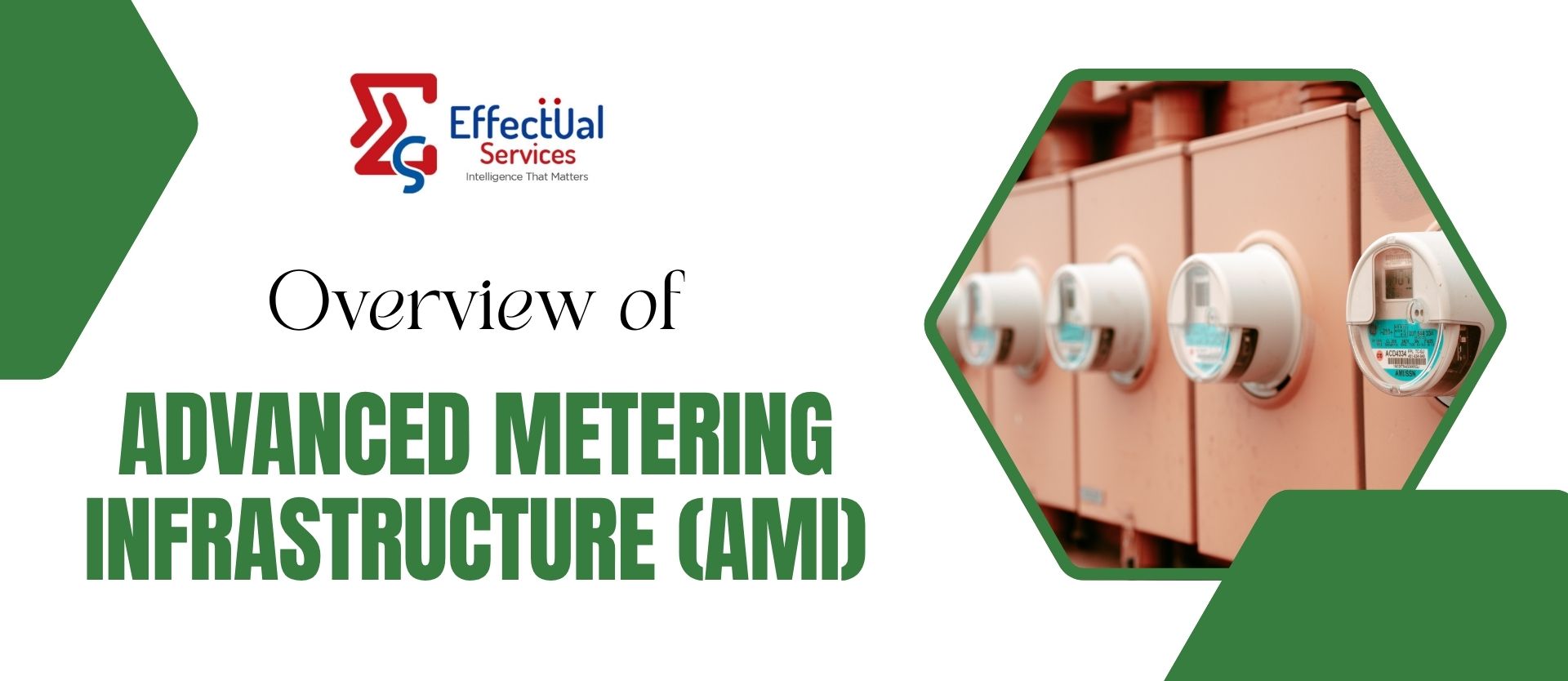
Advanced Metering Infrastructure (AMI) is an integrated system of smart meters, communication networks, data management systems, and analytics platforms that enables two-way communication between utility providers and consumers. Unlike traditional meter-reading systems that require manual data collection, AMI automatically captures, transmits, and processes energy consumption data in near real time.
AMI serves as a foundational component of modern smart grids, providing utilities with enhanced visibility into electricity, gas, and water usage. The technology supports automated meter reading (AMR), outage detection, demand response programs, remote connection and disconnection services, and advanced billing capabilities. By delivering detailed consumption information, AMI empowers consumers to make informed decisions about their energy usage while enabling utilities to improve operational efficiency and grid reliability.
Key benefits of AMI include:
- Real-time or near real-time monitoring of energy consumption.
- Improved billing accuracy and reduced operational costs.
- Faster detection and restoration of outages.
- Enhanced demand-side management and load forecasting.
- Integration with renewable energy resources and distributed energy systems.
- Improved customer engagement through detailed usage insights.
As utilities worldwide continue their digital transformation efforts, AMI has become a critical enabler for achieving sustainability goals, enhancing grid resilience, and supporting the transition toward smarter energy ecosystems.
Geographic Regions
The global Advanced Metering Infrastructure market is experiencing significant growth across multiple regions, driven by government initiatives, smart grid investments, energy efficiency programs, and modernization of aging utility infrastructure.
North America
North America represents one of the most mature AMI markets globally. The United States and Canada have achieved substantial smart meter penetration through large-scale utility deployments and regulatory support. Utilities in the region are increasingly leveraging AMI data for grid modernization, demand response programs, and renewable energy integration.
Key drivers include:
- Smart grid modernization initiatives.
- Regulatory mandates for energy efficiency.
- Increasing adoption of distributed energy resources (DERs).
- Investments in cybersecurity and grid resilience.
Europe
Europe is a leading region in smart meter deployment, supported by ambitious climate policies and energy transition objectives. Countries such as the United Kingdom, Italy, France, Spain, and the Nordic nations have implemented nationwide smart meter rollouts.
Key drivers include:
- European Union energy efficiency directives.
- Decarbonization and net-zero targets.
- Integration of renewable energy sources.
- Consumer empowerment through energy transparency.
Asia-Pacific
Asia-Pacific is the fastest-growing AMI market due to rapid urbanization, industrialization, and increasing electricity demand. Major economies such as China, Japan, India, South Korea, and Australia are investing heavily in smart grid infrastructure and digital utility technologies.
Key drivers include:
- Large-scale smart city initiatives.
- Government-backed grid modernization programs.
- Rising energy consumption and population growth.
- Expansion of renewable energy capacity.
Latin America
The AMI market in Latin America is expanding as utilities seek to reduce energy losses, improve billing accuracy, and modernize distribution networks. Countries such as Brazil, Mexico, Chile, and Colombia are leading regional deployments.
Key drivers include:
- Reduction of non-technical losses and electricity theft.
- Improvement of utility operational efficiency.
- Regulatory reforms supporting smart grid investments.
- Growing urbanization and infrastructure development.
Middle East and Africa
The Middle East and Africa region is witnessing increasing adoption of AMI technologies, particularly in countries pursuing smart city development and utility modernization strategies. Gulf Cooperation Council (GCC) countries, South Africa, and selected North African nations are among the early adopters.
Key drivers include:
- Smart city and digital transformation initiatives.
- Water and energy conservation programs.
- Expansion of utility infrastructure.
- Government investments in sustainable development projects.
Regional Market Outlook
While North America and Europe currently maintain high levels of AMI penetration, Asia-Pacific is expected to contribute the largest share of future market growth due to its vast customer base and ongoing infrastructure investments. Emerging markets in Latin America, the Middle East, and Africa present significant opportunities as utilities increasingly prioritize digitalization, operational efficiency, and sustainability.
The continued evolution of communication technologies, data analytics, artificial intelligence, and smart grid applications is expected to accelerate AMI adoption across all geographic regions, reinforcing its role as a cornerstone of modern utility management.
Advanced Metering Infrastructure (AMI)
Overview
Advanced Metering Infrastructure (AMI) is an integrated system of smart meters, communication networks, data management systems, and analytics platforms that enables two-way communication between utility providers and consumers. Unlike traditional meter-reading systems that require manual data collection, AMI automatically captures, transmits, and processes energy consumption data in near real time.
AMI serves as a foundational component of modern smart grids, providing utilities with enhanced visibility into electricity, gas, and water usage. The technology supports automated meter reading (AMR), outage detection, demand response programs, remote connection and disconnection services, and advanced billing capabilities. By delivering detailed consumption information, AMI empowers consumers to make informed decisions about their energy usage while enabling utilities to improve operational efficiency and grid reliability.
Key benefits of AMI include:
- Real-time or near real-time monitoring of energy consumption.
- Improved billing accuracy and reduced operational costs.
- Faster detection and restoration of outages.
- Enhanced demand-side management and load forecasting.
- Integration with renewable energy resources and distributed energy systems.
- Improved customer engagement through detailed usage insights.
As utilities worldwide continue their digital transformation efforts, AMI has become a critical enabler for achieving sustainability goals, enhancing grid resilience, and supporting the transition toward smarter energy ecosystems.
Geographic Regions
The global Advanced Metering Infrastructure market is experiencing significant growth across multiple regions, driven by government initiatives, smart grid investments, energy efficiency programs, and modernization of aging utility infrastructure.
North America
North America represents one of the most mature AMI markets globally. The United States and Canada have achieved substantial smart meter penetration through large-scale utility deployments and regulatory support. Utilities in the region are increasingly leveraging AMI data for grid modernization, demand response programs, and renewable energy integration.
Key drivers include:
- Smart grid modernization initiatives.
- Regulatory mandates for energy efficiency.
- Increasing adoption of distributed energy resources (DERs).
- Investments in cybersecurity and grid resilience.
Europe
Europe is a leading region in smart meter deployment, supported by ambitious climate policies and energy transition objectives. Countries such as the United Kingdom, Italy, France, Spain, and the Nordic nations have implemented nationwide smart meter rollouts.
Key drivers include:
- European Union energy efficiency directives.
- Decarbonization and net-zero targets.
- Integration of renewable energy sources.
- Consumer empowerment through energy transparency.
Asia-Pacific
Asia-Pacific is the fastest-growing AMI market due to rapid urbanization, industrialization, and increasing electricity demand. Major economies such as China, Japan, India, South Korea, and Australia are investing heavily in smart grid infrastructure and digital utility technologies.
Key drivers include:
- Large-scale smart city initiatives.
- Government-backed grid modernization programs.
- Rising energy consumption and population growth.
- Expansion of renewable energy capacity.
Latin America
The AMI market in Latin America is expanding as utilities seek to reduce energy losses, improve billing accuracy, and modernize distribution networks. Countries such as Brazil, Mexico, Chile, and Colombia are leading regional deployments.
Key drivers include:
- Reduction of non-technical losses and electricity theft.
- Improvement of utility operational efficiency.
- Regulatory reforms supporting smart grid investments.
- Growing urbanization and infrastructure development.
Middle East and Africa
The Middle East and Africa region is witnessing increasing adoption of AMI technologies, particularly in countries pursuing smart city development and utility modernization strategies. Gulf Cooperation Council (GCC) countries, South Africa, and selected North African nations are among the early adopters.
Key drivers include:
- Smart city and digital transformation initiatives.
- Water and energy conservation programs.
- Expansion of utility infrastructure.
- Government investments in sustainable development projects.
Regional Market Outlook
While North America and Europe currently maintain high levels of AMI penetration, Asia-Pacific is expected to contribute the largest share of future market growth due to its vast customer base and ongoing infrastructure investments. Emerging markets in Latin America, the Middle East, and Africa present significant opportunities as utilities increasingly prioritize digitalization, operational efficiency, and sustainability.
The continued evolution of communication technologies, data analytics, artificial intelligence, and smart grid applications is expected to accelerate AMI adoption across all geographic regions, reinforcing its role as a cornerstone of modern utility management.
Advanced Metering Infrastructure (AMI)
Overview
Advanced Metering Infrastructure (AMI) is an integrated system of smart meters, communication networks, data management systems, and analytics platforms that enables two-way communication between utility providers and consumers. Unlike traditional meter-reading systems that require manual data collection, AMI automatically captures, transmits, and processes energy consumption data in near real time.
AMI serves as a foundational component of modern smart grids, providing utilities with enhanced visibility into electricity, gas, and water usage. The technology supports automated meter reading (AMR), outage detection, demand response programs, remote connection and disconnection services, and advanced billing capabilities. By delivering detailed consumption information, AMI empowers consumers to make informed decisions about their energy usage while enabling utilities to improve operational efficiency and grid reliability.
Key benefits of AMI include:
- Real-time or near real-time monitoring of energy consumption.
- Improved billing accuracy and reduced operational costs.
- Faster detection and restoration of outages.
- Enhanced demand-side management and load forecasting.
- Integration with renewable energy resources and distributed energy systems.
- Improved customer engagement through detailed usage insights.
As utilities worldwide continue their digital transformation efforts, AMI has become a critical enabler for achieving sustainability goals, enhancing grid resilience, and supporting the transition toward smarter energy ecosystems.
Geographic Regions
The global Advanced Metering Infrastructure market is experiencing significant growth across multiple regions, driven by government initiatives, smart grid investments, energy efficiency programs, and modernization of aging utility infrastructure.
North America
North America represents one of the most mature AMI markets globally. The United States and Canada have achieved substantial smart meter penetration through large-scale utility deployments and regulatory support. Utilities in the region are increasingly leveraging AMI data for grid modernization, demand response programs, and renewable energy integration.
Key drivers include:
- Smart grid modernization initiatives.
- Regulatory mandates for energy efficiency.
- Increasing adoption of distributed energy resources (DERs).
- Investments in cybersecurity and grid resilience.
Europe
Europe is a leading region in smart meter deployment, supported by ambitious climate policies and energy transition objectives. Countries such as the United Kingdom, Italy, France, Spain, and the Nordic nations have implemented nationwide smart meter rollouts.
Key drivers include:
- European Union energy efficiency directives.
- Decarbonization and net-zero targets.
- Integration of renewable energy sources.
- Consumer empowerment through energy transparency.
Asia-Pacific
Asia-Pacific is the fastest-growing AMI market due to rapid urbanization, industrialization, and increasing electricity demand. Major economies such as China, Japan, India, South Korea, and Australia are investing heavily in smart grid infrastructure and digital utility technologies.
Key drivers include:
- Large-scale smart city initiatives.
- Government-backed grid modernization programs.
- Rising energy consumption and population growth.
- Expansion of renewable energy capacity.
Latin America
The AMI market in Latin America is expanding as utilities seek to reduce energy losses, improve billing accuracy, and modernize distribution networks. Countries such as Brazil, Mexico, Chile, and Colombia are leading regional deployments.
Key drivers include:
- Reduction of non-technical losses and electricity theft.
- Improvement of utility operational efficiency.
- Regulatory reforms supporting smart grid investments.
- Growing urbanization and infrastructure development.
Middle East and Africa
The Middle East and Africa region is witnessing increasing adoption of AMI technologies, particularly in countries pursuing smart city development and utility modernization strategies. Gulf Cooperation Council (GCC) countries, South Africa, and selected North African nations are among the early adopters.
Key drivers include:
- Smart city and digital transformation initiatives.
- Water and energy conservation programs.
- Expansion of utility infrastructure.
- Government investments in sustainable development projects.
Regional Market Outlook
While North America and Europe currently maintain high levels of AMI penetration, Asia-Pacific is expected to contribute the largest share of future market growth due to its vast customer base and ongoing infrastructure investments. Emerging markets in Latin America, the Middle East, and Africa present significant opportunities as utilities increasingly prioritize digitalization, operational efficiency, and sustainability.
The continued evolution of communication technologies, data analytics, artificial intelligence, and smart grid applications is expected to accelerate AMI adoption across all geographic regions, reinforcing its role as a cornerstone of modern utility management.
Advanced Metering Infrastructure (AMI)
Overview
Advanced Metering Infrastructure (AMI) is an integrated system of smart meters, communication networks, data management systems, and analytics platforms that enables two-way communication between utility providers and consumers. Unlike traditional meter-reading systems that require manual data collection, AMI automatically captures, transmits, and processes energy consumption data in near real time.
AMI serves as a foundational component of modern smart grids, providing utilities with enhanced visibility into electricity, gas, and water usage. The technology supports automated meter reading (AMR), outage detection, demand response programs, remote connection and disconnection services, and advanced billing capabilities. By delivering detailed consumption information, AMI empowers consumers to make informed decisions about their energy usage while enabling utilities to improve operational efficiency and grid reliability.
Key benefits of AMI include:
- Real-time or near real-time monitoring of energy consumption.
- Improved billing accuracy and reduced operational costs.
- Faster detection and restoration of outages.
- Enhanced demand-side management and load forecasting.
- Integration with renewable energy resources and distributed energy systems.
- Improved customer engagement through detailed usage insights.
As utilities worldwide continue their digital transformation efforts, AMI has become a critical enabler for achieving sustainability goals, enhancing grid resilience, and supporting the transition toward smarter energy ecosystems.
Geographic Regions
The global Advanced Metering Infrastructure market is experiencing significant growth across multiple regions, driven by government initiatives, smart grid investments, energy efficiency programs, and modernization of aging utility infrastructure.
North America
North America represents one of the most mature AMI markets globally. The United States and Canada have achieved substantial smart meter penetration through large-scale utility deployments and regulatory support. Utilities in the region are increasingly leveraging AMI data for grid modernization, demand response programs, and renewable energy integration.
Key drivers include:
- Smart grid modernization initiatives.
- Regulatory mandates for energy efficiency.
- Increasing adoption of distributed energy resources (DERs).
- Investments in cybersecurity and grid resilience.
Europe
Europe is a leading region in smart meter deployment, supported by ambitious climate policies and energy transition objectives. Countries such as the United Kingdom, Italy, France, Spain, and the Nordic nations have implemented nationwide smart meter rollouts.
Key drivers include:
- European Union energy efficiency directives.
- Decarbonization and net-zero targets.
- Integration of renewable energy sources.
- Consumer empowerment through energy transparency.
Asia-Pacific
Asia-Pacific is the fastest-growing AMI market due to rapid urbanization, industrialization, and increasing electricity demand. Major economies such as China, Japan, India, South Korea, and Australia are investing heavily in smart grid infrastructure and digital utility technologies.
Key drivers include:
- Large-scale smart city initiatives.
- Government-backed grid modernization programs.
- Rising energy consumption and population growth.
- Expansion of renewable energy capacity.
Latin America
The AMI market in Latin America is expanding as utilities seek to reduce energy losses, improve billing accuracy, and modernize distribution networks. Countries such as Brazil, Mexico, Chile, and Colombia are leading regional deployments.
Key drivers include:
- Reduction of non-technical losses and electricity theft.
- Improvement of utility operational efficiency.
- Regulatory reforms supporting smart grid investments.
- Growing urbanization and infrastructure development.
Middle East and Africa
The Middle East and Africa region is witnessing increasing adoption of AMI technologies, particularly in countries pursuing smart city development and utility modernization strategies. Gulf Cooperation Council (GCC) countries, South Africa, and selected North African nations are among the early adopters.
Key drivers include:
- Smart city and digital transformation initiatives.
- Water and energy conservation programs.
- Expansion of utility infrastructure.
- Government investments in sustainable development projects.
Regional Market Outlook
While North America and Europe currently maintain high levels of AMI penetration, Asia-Pacific is expected to contribute the largest share of future market growth due to its vast customer base and ongoing infrastructure investments. Emerging markets in Latin America, the Middle East, and Africa present significant opportunities as utilities increasingly prioritize digitalization, operational efficiency, and sustainability.
The continued evolution of communication technologies, data analytics, artificial intelligence, and smart grid applications is expected to accelerate AMI adoption across all geographic regions, reinforcing its role as a cornerstone of modern utility management.
Solutions Driving Innovation & Intelligence


Enabling Fortune 500's, R&D Giants, Law firms, Universities, Research institutes & SME's Around The Globe Gather Intelligence That
Protects and Nurtures Innovation Through a Team of 250+ Techno Legal Professionals.