
Articles
Beyond Soy: How Plant Proteins Are Solving Taste, Texture and Stability
Beyond Soy: How Plant Proteins Are Solving Taste, Texture and Stability
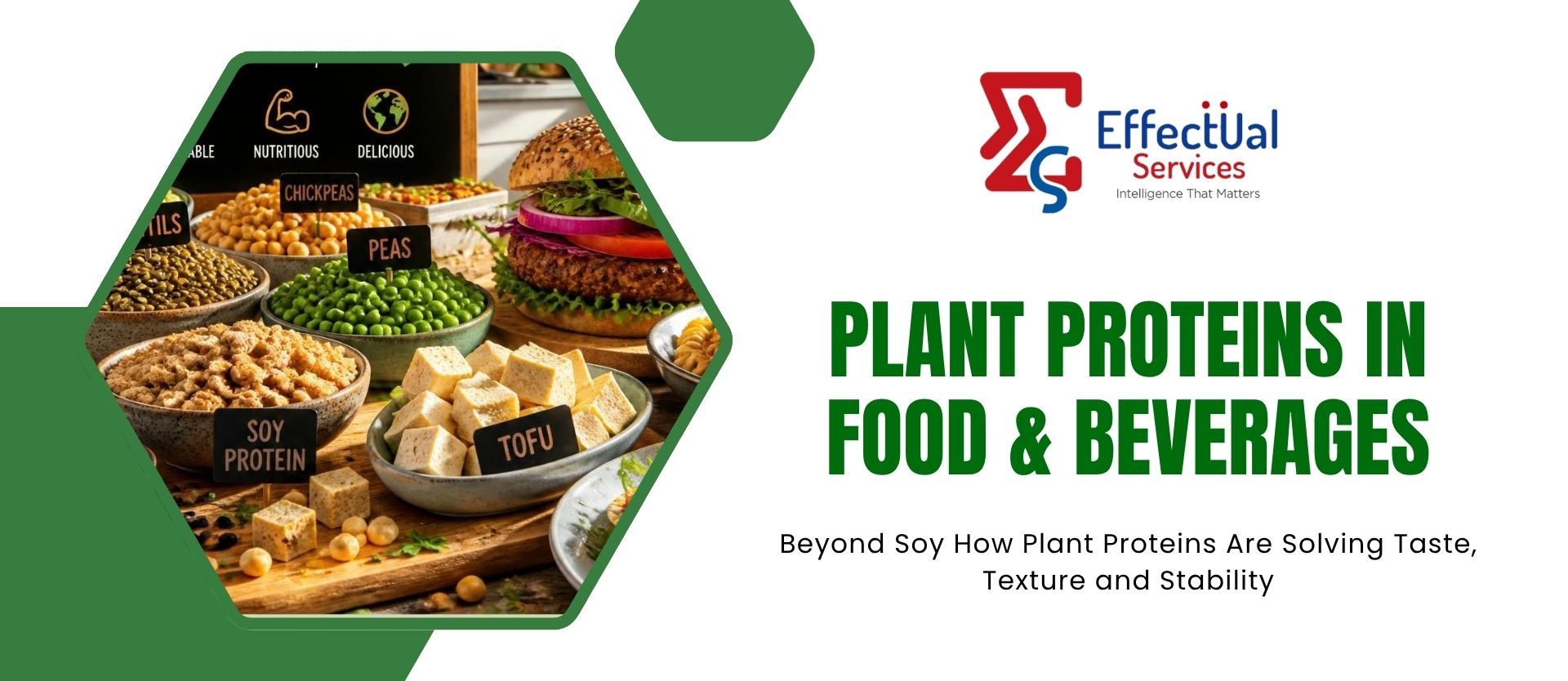
Plant proteins are moving from niche to mainstream, but most still carry bitterness, grittiness, poor solubility or off-flavours. Patents and academic studies on ten ingredients show how researchers are fixing these problems.
Wheat: texture and structure
Wheat protein, made of gliadin and glutenin, gives dough its elasticity. It is also widely used in meat analogues, where it acts as a binder and builds fibrous, meat-like structure. Wheat-based products can reach up to 70% protein.
Archer Daniels Midland developed a wheat protein isolate by mixing gluten with water into a slurry and holding it at controlled temperatures. No acids, enzymes or buffers are added. The result is a blander-tasting isolate with better rheology, water absorption, film-forming and binding. Wheat protein also works with swelling-inhibited starch to mimic egg-white texture in noodles.
Legumes: taming bitterness
Legume proteins (pea, lentil, chickpea, soy) suit beverages, snacks, toddler nutrition and plant-based yogurt. Their main weakness is bitterness. Roquette found that heat-sterilizing pea protein with sodium citrate under specific time-temperature conditions, such as 130°C for 120–240 seconds, cuts bitterness and gives an acceptable texture. Standard UHT conditions leave pea protein bitter. Pea cultivation also needs no nitrogen fertilizer, since peas fix nitrogen from the air.
Dairy-like plant proteins
Ripple Foods showed why pea-protein yogurt often stalls. Purified plant proteins lack the free amino acids, vitamins and buffering capacity of milk, so cultures acidify poorly. Adding amino acids, vitamins and a buffer such as potassium phosphate restored near-normal fermentation. A later Greek-style formulation matched dairy yogurt on thickness and protein content. Other patents cover non-dairy cream, soft cheese and coconut-based yogurt.
Brazzein: a protein that tastes sweet
Brazzein is a 54-amino-acid protein from a West African fruit. It is 500–2,000 times sweeter than sugar by weight, with a sugar-like taste and little bitter or metallic aftertaste. It is soluble and heat-stable, surviving 80°C for hours across a pH range of 2.5–8. In a 15-week mouse study, brazzein did not cause the fat gain seen with sucrose.
The fruit is rare and hard to farm, so commercial supply depends on recombinant production in E. coli, yeast, maize or rice. Coca-Cola and Joywell Foods hold patents on brazzein-containing sweeteners and beverages. Brazzein works best blended with other sweeteners, because its sweetness arrives more slowly than sugar’s.
Carrot: an unexpected functional ingredient
Carrot ingredients add fibrousness and colour to meat replicas, and carrot protein isolate can serve as a yogurt-analog base. Jiangnan University found that carrot antifreeze protein improves frozen dough. It lowers freezable water, holds loaf volume and gives a softer crumb. The USDA has also isolated a bifunctional carrot enzyme that could be used to adjust amino acid content in plants.
Rice protein: solving the solubility problem
Rice protein is hypoallergenic and nutritious but poorly soluble and often gritty. It is also low in lysine, and rice can contain inorganic arsenic. Three approaches stand out:
- Kameda Seiko (Japan): Sieving the alkaline extract and controlling neutralization pH and temperature produced a high-purity, finely dispersible composition that forms gels holding at least six times their weight in water.
- Jiangnan University: Dissolving rice and soy proteins together at pH 12, then neutralizing to pH 7, raised rice protein solubility from under 2% to over 80%. Emulsifying and foaming capacity roughly doubled or tripled.
- Abbott: Vegetable protein can make up 65% or more of total protein in a nutrition shake if soy is combined with potato or rice protein, or if low-phytic-acid legume protein is used.
Lentil, whole grain, potato and walnut
Lentil protein has strong foaming and water-holding properties and can replace eggs in cakes and muffins. Its off-flavours can be reduced by washing with 75% ethanol or isopropanol. Lentils also contain antinutrients and FODMAPs, and raw lentils contain lectins that cause digestive upset.
Whole grain protein has an evidence base on the health side. A meta-analysis of nine trials with 838 participants linked whole grains to lower inflammatory markers, including CRP and IL-6. On the product side, a multigrain beverage uses enzymatic hydrolysis to get a smooth, low-viscosity drink.
Potato protein has a PDCAAS of 0.93 and strong emulsifying, foaming and gelling properties. It can replace egg white, caseinate or gelatine. It is a by-product of starch production, so supply is a constraint, since potato juice contains only about 1.5% protein. Gentle extraction methods such as Avebe’s Solanic process avoid the heat damage and gritty texture of older coagulation methods. A University of Hohenheim study found that lowering the charge on plant proteins with pectin reduces bitterness, although too much pectin hurts mouthfeel.
Walnut protein comes from oil-pressing residue. Subcritical low-temperature extraction (below 30°C) preserves protein quality, and a Dalian Polytechnic process turns walnut kernels into a stable beverage. Walnuts are calorie-dense, and nut allergies are a risk.
Cold storage
Protein stability depends on storage. Proteins keep best at or below 4°C for the short term, or at −20°C to −80°C for the long term, and repeated freeze-thaw cycles degrade them. Cryoprotectants such as glycerol and carrier proteins help.
The business case: fermentation
Fermentation is the fastest-growing route to alternative protein. The global plant protein market was forecast to grow at a CAGR of 7.19% over 2020–2027. Alternative protein companies raised about $3.1 billion in 2020, and fermentation firms took nearly $600 million of it, more than double 2019. Perfect Day makes dairy proteins from plant sugars by precision fermentation, and Mycorena grows mycoprotein from agricultural waste. Chunk Foods and Atlast Foods are developing whole-cut meat alternatives, and MycoTechnology ferments pea and rice protein with shiitake mycelium. In France, Les Nouveaux Affineurs makes plant-based cheeses and has raised over €2 million for its growth plans.
Takeaway
Across these ingredients, the best results come from combining proteins, tuning processing conditions such as pH, temperature and sterilization time, and borrowing from fermentation to improve taste and function. Single-ingredient solutions are rarer than blends. The remaining hurdles are flavour, solubility and reliable supply.
Solutions Driving Innovation & Intelligence


Enabling Fortune 500's, R&D Giants, Law firms, Universities, Research institutes & SME's Around The Globe Gather Intelligence That
Protects and Nurtures Innovation Through a Team of 250+ Techno Legal Professionals.