
Articles
Formulation Technologies for Plant-Based Food Products
Formulation Technologies for Plant-Based Food Products
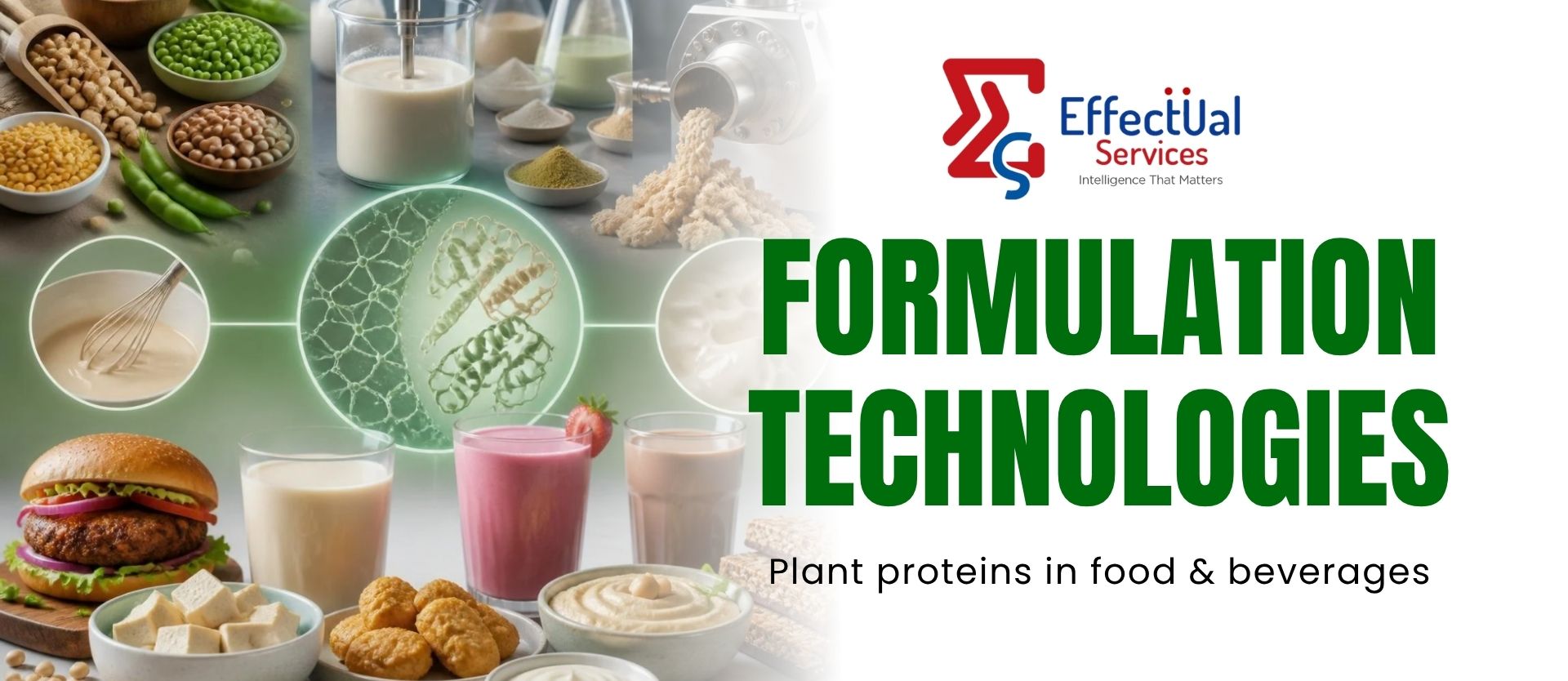
Formulation Technology
The major formulation technologies used for developing stable, functional, and sensory-acceptable plant-based food products include:
- Micelles with plant oil
- Emulsion gels
- Microparticles
- Flavouring agents
- Crosslinking agents
1. Micelles with Plant Oil
A micelle is an aggregate of surfactant molecules dispersed in a liquid. In an aqueous system, the hydrophilic heads face the surrounding water, while the hydrophobic tails are directed toward the interior of the micelle. When the surfactant concentration exceeds the critical micelle concentration (CMC), micelles can solubilize compounds that are normally poorly soluble in water by incorporating them into their hydrophobic core.
Reverse micelles (RMs) are nanometer-sized aggregates in which water is encapsulated within an inner core surrounded by surfactant molecules in a non-polar solvent. Their confined aqueous cores have potential applications in food science.
Casein and Plant-Protein Micelles
Casein micelles naturally occur as a stable colloidal suspension in milk. They have good stability in aqueous systems and can interact with other proteins, including plant proteins, to improve their stability and functionality.
Plant proteins such as chia, rice, coconut, almond, oat, hemp, peanut, pea, cashew, quinoa, and flax proteins can have limited stability in aqueous systems because of their tendency to aggregate. Globulins and albumins from plant sources can therefore create challenges during food formulation.
The use of casein micelles provides a method for stabilizing these plant proteins. Casein micelles have useful properties such as:
- Swelling at low temperatures.
- Swelling under alkaline pH conditions.
- Dissociation in the presence of calcium-chelating agents.
- Ability to interact with and stabilize other proteins.
A combination of casein and plant proteins can therefore improve the physical stability, texture, taste, and flavour of dairy-based products.
Method for Preparing a Stable Plant-Protein/Casein Suspension
A process for preparing a stable suspension of globular plant protein in a dairy product involves:
- Obtaining the globular plant-protein material.
- Soaking the material in liquid.
- Centrifuging the protein/liquid mixture.
- Separating the supernatant from the pellet.
- Retaining the supernatant containing soluble globular protein.
- Adding sodium citrate to casein micelles and allowing them to equilibrate to obtain swollen casein micelles.
- Adding the soluble plant protein to the dairy system.
- Homogenizing the mixture to obtain a stable suspension.
Stability Test
The effect of homogenization on the stability of chia plant protein and casein micelles in milk was investigated over 14 days. The objective was to stabilize protein-protein interactions between chia protein and casein micelles.
The results showed that dissociation of casein micelles followed by homogenization at approximately 4°C and 350 bar effectively promoted the codispersion and stabilization of chia plant protein and casein micelles.
This approach can therefore be useful for producing stable dairy products containing plant proteins.
2. Emulsion Gel
An emulsion gel is a composite structure consisting of oil droplets dispersed within a gel matrix. It can generally be classified into:
- Emulsion-filled gels
- Emulsion particulate gels
The oil droplets can act as active fillers and influence the rheological and textural properties of the gel.
Formation of Emulsion Gels
In heat-induced gelation, heating causes proteins to unfold and expose hydrophobic groups. These proteins can then interact and self-assemble into a three-dimensional network. Oil droplets become incorporated and immobilized within this protein network.
Protein-based emulsion gels usually contain a relatively high protein concentration in the continuous phase. Gel formation can occur through several mechanisms, including:
- Heat-induced gelation
- Acid-induced gelation
- Salt-induced gelation
- Hydrostatic-pressure-induced gelation
- Enzyme-induced gelation
- Ethanol-induced gelation
Although heat-set methods are relatively simple, they are not suitable for some heat-sensitive ingredients because plant proteins and other functional components may be affected by high temperatures.
Emulsion gels can be used to improve the flavour, aroma, appearance, mouthfeel, and texture of plant-based foods. Applications include cheese replicas and meat analogues, where the gel can provide properties similar to animal fat.
Non-Dairy Emulsion Gel
A method for preparing a non-dairy composition involves producing emulsion-gel particles from dietary fibre, calcium, plant protein, water, and lipids.
The process includes:
- Dry mixing dietary fibre, calcium, and plant protein.
- Adding water under shear until a homogeneous mixture is obtained.
- Adding lipids and emulsifying under high shear.
- Adjusting the pH to approximately 4–6.
- Heating the emulsion to approximately 80–90°C.
- Cooling the emulsion to approximately 10–25°C to form a solid emulsified gel.
- Breaking the gel into smaller particles.
- Adding melted lipid to form a continuous phase.
- Mixing until the added lipid is partially crystallized.
- Moulding or optionally aerating the product.
- Storing at approximately 4–6°C for further hardening.
Texture Development
At laboratory scale, a double-jacketed mixer equipped with a cutting blade can be used.
The powder ingredients are first dry-mixed, followed by slow addition of water under high shear at approximately 20°C for 5–10 minutes. High-oleic sunflower oil is then incorporated under lower shear for approximately 10–15 minutes. This produces an emulsion-gel structure in which the oil droplets are stabilized within the fibre-protein network.
The mixture can subsequently be heated to approximately 85°C under high shear and then cooled to 10–25°C.
Application in Vegan Burgers
Emulsion-gel flakes can be used as an alternative to coconut-fat flakes in vegan burgers. The flakes provide a dispersed fat phase while contributing to the texture and mouthfeel of the final product.
For burger preparation, textured soy protein is hydrated and mixed with ingredients such as methylcellulose, salt, flavouring agents, and colouring materials. Coconut fat flakes or fat-dispersed emulsion-gel flakes are then incorporated, and the mixture is moulded into patties.
The patties can be refrigerated before cooking. Emulsion-gel systems can therefore provide a controlled fat distribution and contribute to the appearance and texture of meat analogues.
3. Microparticles
Microparticles are particles generally ranging from approximately 1 to 1000 μm. Their relatively high surface-to-volume ratio gives them properties that differ considerably from larger particles.
In food systems, microparticles and nanoparticles have been investigated for:
- Delivery of bioactive compounds
- Encapsulation of colours and flavours
- Delivery of antimicrobial agents
- Probiotic delivery
- Modification of food structure
- Control of rheology
- Improvement of texture
Protein microparticles are particularly useful for controlling the mechanical and textural properties of high-protein foods.
Plant proteins such as potato, canola, and pea proteins can be used to produce functional microparticles. Microparticles produced from plant proteins and fibres through processes such as electrostatic complexation and thermal aggregation have also been investigated as clouding agents in beverages.
Microencapsulation can additionally protect sensitive compounds and improve their incorporation into food products.
Application
Protein microparticles can be incorporated into products such as:
- Beverages
- Cakes
- Liquid creamers
- General food products
They may improve physical stability while also helping to deliver functional ingredients.
Encapsulation Study
Microparticles containing oil were evaluated for encapsulation efficiency and particle size.
Sample A – 80% oil loading:
- Encapsulation efficiency: approximately 95.16%
- Particle size: approximately 36 μm
Sample B – 60% oil loading:
- Encapsulation efficiency: approximately 99.08%
- Particle size: approximately 63 μm
The results demonstrate that plant-protein-based microparticles can achieve high encapsulation efficiencies.
Particle Size and Thermal Analysis
Particle-size distributions were measured using a particle-size analysis system at approximately 23°C, using a 635-nm light source and a 90° scattering angle. Samples were diluted in deionized water before analysis.
Differential scanning calorimetry was also performed using aluminium pans. Samples were scanned at 5°C/min from 25°C to 90°C after calibration with an indium standard.
Permeation Study
A microencapsulated cannabinoid-rich hemp oil formulation was evaluated using isolated rat colonic mucosa.
The microencapsulated hemp oil demonstrated greater permeation capacity compared with free hemp oil. Changes in transepithelial electrical resistance (TEER) were associated with the presence and concentration of microencapsulated cannabinoids.
These findings indicate the potential of microparticles as delivery systems for sensitive oil-soluble compounds.
4. Flavouring Agents
Flavouring agents are substances, extracts, or preparations capable of providing taste, aroma, or both to food.
Flavouring systems can broadly include:
- Natural flavourings
- Artificial flavourings
- Nature-identical flavourings
- Natural flavour enhancers
Flavour enhancers such as umami-producing ingredients can be particularly important in plant-based foods because they can reduce undesirable plant-protein flavours and improve overall sensory acceptance.
Application in Plant-Based Foods
Flavouring agents are commonly used in:
- Meat analogues
- Plant-based yoghurt
- Protein drinks
- Solid foam products
- Vegetable-protein-based foods
- Plant-based milk products
Protein sources used in these products may include wheat, legumes, aquafaba, potato, rice, pea, oat, vegetables, and other pulses.
In plant-based meat products, flavouring systems can combine seasonings and flavour precursors to produce a more natural and meat-like flavour profile. Savoury and umami characteristics are particularly important for meat analogues.
Flavouring agents can also be added after the hydration of plant proteins and incorporated during subsequent processing.
Protein Drinks and Foams
Plant protein combinations such as faba bean, rice, and pea proteins can be used in protein drinks. These systems can provide amino acids while flavouring agents improve taste and consumer acceptability.
Plant-derived protein whipping agents can also be combined with sweeteners and flavouring agents to produce stable foams for beverages and other food products.
Sensory Evaluation
Sensory tests have been used to determine the umami and salt-enhancing properties of pea-based flavouring materials.
In one evaluation, trained analysts assessed a pea-based flavouring material in water for umami and salty taste.
Its salt-intensifying effect was also assessed by comparing low-sodium chicken broth with and without the pea-based material. Another comparison evaluated the pea-based flavouring system against potassium chloride as a salt-intensifying ingredient.
Further sensory testing evaluated umami intensity against broth samples containing ingredients such as:
- Autolysed yeast extract
- Hydrolysed vegetable protein
- Cultivated wheat gluten
Trained analysts rated umami intensity on a 0–100 scale, ranging from no umami sensation to high umami intensity. Samples were presented at approximately 60°C, with palate cleansing between samples.
The results were statistically evaluated using analysis of variance. These studies demonstrate the potential of plant-based flavouring systems to enhance umami and salt perception while improving the sensory quality of reduced-sodium and plant-based foods.
5. Crosslinking Agents
Crosslinking is the formation of chemical links between molecular chains, resulting in a three-dimensional network. Crosslinking agents contain two or more reactive groups capable of interacting with functional groups present in proteins or other molecules.
In food formulation, protein crosslinking can improve:
- Gel formation
- Texture
- Cohesiveness
- Elasticity
- Water-holding capacity
- Structural stability
Crosslinking in Plant-Based Foods
Protein crosslinking has been investigated for producing plant-based foods with improved meat-like or dairy-like properties.
One important crosslinking enzyme is transglutaminase, which can promote protein-protein crosslinking and gel formation.
Crosslinking approaches have been applied to:
- Meat analogues
- Cheese replicas
- Peanut tofu
- Heat-stable plant-based protein products
- Other protein-based foods
Plant protein sources may include legumes, cereals, nuts, corn, fruit vegetables, and other plant materials. Nut proteins can include proteins from almonds, cashews, Brazil nuts, coconuts, hazelnuts, macadamia nuts, peanuts, pecans, pistachios, and walnuts.
Peanut Tofu
One application involves producing peanut tofu from peanut meal. The peanut meal is processed into a pulp, followed by modification using a crosslinking enzyme such as transglutaminase.
Crosslinking produces a structured product with improved firmness and texture while retaining the characteristic nutritional and flavour properties of peanuts.
Meat Analogues
Protein crosslinking can produce plant-based meat products with improved appearance, firmness, elasticity, cohesiveness, and chewiness.
Crosslinking enzymes can be added during preparation of the raw-material mixture or after the mixture has been prepared. The enzyme then reacts with the proteins and promotes gelation.
The resulting network can help reproduce some of the structural properties of animal muscle tissue while maintaining the nutritional benefits of plant proteins.
Crosslinked plant-protein systems may also improve water-holding capacity and contribute to the texture of cooked meat analogues.
Tests for Artificial Meat
Texture Measurement
The texture of artificial meat can be evaluated using a food texture analyser. Samples are cut into standardized pieces, for example 2 × 2 cm, and parameters such as:
- Hardness
- Gumminess
- Cohesiveness
- Springiness
- Chewiness
are measured.
Measurements are repeated several times and expressed as average values with standard deviation. Beef can be used as a control for comparison.
Sensory Evaluation
Sensory evaluation can be performed using adult panelists. Meat-alternative samples are cooked under standardized conditions and evaluated for:
- Flavour
- Taste
- Texture
- Overall acceptability
A five-point scale can be used, with higher scores indicating greater acceptance. Beef samples prepared under comparable conditions can serve as controls.
Results
Texture measurements showed that the hardness of some artificial meat products remained lower than that of animal meat. However, gumminess, cohesiveness, springiness, and chewiness did not show significant differences from the animal-meat control in the reported experiments.
Sensory evaluation also indicated that some artificial meat formulations did not show significant differences from animal meat in aroma, taste, texture, and overall preference.
The addition of wheat-protein hydrolysate during formulation and cooking reduced undesirable plant-based off-flavours while improving umami, flavour, and texture.
Formulations containing combinations of three or more plant proteins achieved particularly good sensory characteristics. Some formulations containing mushroom protein received overall acceptance comparable to the beef control.
The results also showed that desirable meat-like texture, aroma, and taste could be achieved even with relatively low gluten content in certain formulations.
Conclusion
The major formulation technologies—micelles, emulsion gels, microparticles, flavouring agents, and crosslinking agents—provide different approaches for improving the functionality and sensory quality of plant-based foods.
Micelle systems can improve the dispersion and stability of plant proteins, particularly when combined with casein micelles. Emulsion gels provide controlled fat distribution and can reproduce important texture, mouthfeel, and structural characteristics of animal-derived products. Microparticles provide efficient systems for encapsulation, protection, delivery, and texture modification.
Flavouring agents are particularly important for overcoming plant-protein off-flavours and developing savoury, salty, and umami characteristics in meat analogues, dairy alternatives, beverages, and other products. Crosslinking agents, particularly protein-crosslinking enzymes, help create three-dimensional protein networks that improve texture, cohesiveness, elasticity, chewiness, and water-holding capacity.
Together, these technologies can be used individually or in combination to develop plant-based foods with improved stability, texture, flavour, nutritional characteristics, appearance, and consumer acceptance. They have applications across meat analogues, dairy alternatives, beverages, protein foods, bakery products, and other functional food systems.
Solutions Driving Innovation & Intelligence


Enabling Fortune 500's, R&D Giants, Law firms, Universities, Research institutes & SME's Around The Globe Gather Intelligence That
Protects and Nurtures Innovation Through a Team of 250+ Techno Legal Professionals.