
Articles
Bio-fuels Overview
Bio-fuels Overview
Bio-fuel is an alternative source of energy made from organic materials such as plants, agricultural waste, and even animal byproducts. Unlike fossil fuels—which take millions of years to form—biofuels are renewable and can be produced in a much shorter time, making them a promising solution to the world’s growing energy needs.
As concerns about climate change and environmental pollution continue to rise, biofuels have gained attention for their potential to reduce greenhouse gas emissions. When burned, many biofuels release significantly less carbon dioxide compared to conventional fuels like petrol and diesel. Some common types of biofuels include ethanol, biodiesel, and biogas, each derived from different biological sources such as corn, sugarcane, vegetable oils, or organic waste.
Biofuels are already being used around the world—blended with traditional fuels to power vehicles, generate electricity, and support cleaner industrial processes. However, they also come with challenges, including land use concerns, food supply impacts, and production costs.
Overall, biofuels represent a step toward a more sustainable and eco-friendly future, offering a balance between energy demand and environmental responsibility.
Bio-Fuel Producing Methods
Method 01 Fermentation
Process by which microorganisms such as yeast and bacteria convert organic molecules (biomass) into bio-fuels.
Method 02 Liquefaction
Process used to convert wet biomass into crude-like oil. Catalysts to improve the quality of yields. The processed fuel can be used as marine or jet-fuels.
Method 03 Saccharification
In Saccharification, microorganism is used to hydrolyze microbial to produce bio-fuels.
Method 04 Enzymatic
The processes which utilizes proteins called enzymes (biological catalysts) is known as enzymatic process. Biomass is treated with enzymes to produce all types of bio-fuels.
Method 05 Hydrolysis
Bio-oil is hydrolyzed as enzymatic hydrolysis or water vapor hydrolysis at high temperature and high pressure to the fatty acids then free fatty acids are converted to biodiesel.
Method 06 Transesterification
It is also used to convert vegetable fats into biodiesel. Transesterified vegetable oil is used to power heavy-duty vehicles.
Method 07 Pyrolysis
Pyrolysis is a decomposition of organic material at elevated temperatures in the absence of oxygen, it is the basis of several methods for producing fuel from biomass, which may include either crops or biological waste products from other industries.
Method 08 Esterification
The chemical reaction of producing biodiesel is a biodiesel esterification. Animal and plant fats and oils are typically made of triglycerides which are esters of free fatty acids with the trihydric alcohol, glycerol.
Method 09 Fischer Tropsch
The process consists of a set of chemical reactions which compromise gasification that changes a mixture of CO gas and H2 gas into liquid hydrocarbons. It can produce higher yield directly which results in lower NOx and particle emissions.
Method 10 Gasification
Gasification involves burning biomass under restricted air supply for the generation of producer gas. Producer gas is a mixture of gases CO, H2, CO2, CH4 and N2.
Method 11 Photo Bioreactor
A photo bioreactor utilizes a light source to cultivate phototrophic microorganisms that use photosynthesis to generate biomass from light and carbon dioxide and include plants, mosses, microalgae, macroalgae, cyano bacteria and purple bacteria.
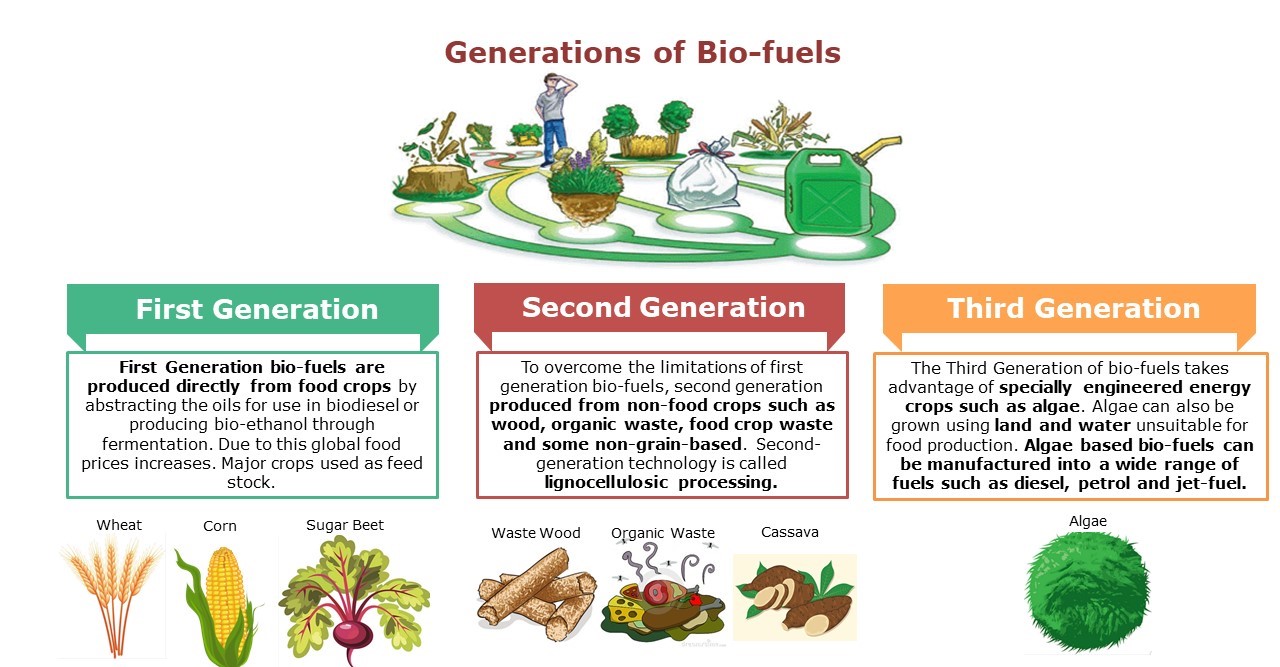
Generations of Bio-fuels
First Generation: First Generation bio-fuels are produced directly from food crops by abstracting the oils for use in biodiesel or producing bio-ethanol through fermentation. Due to this global food prices increases. Major crops used as feed stock.
Second Generation: To overcome the limitations of first generation bio-fuels, second generation produced from non-food crops such as wood, organic waste, food crop waste and some non-grain-based. Second-generation technology is called lignocellulosic processing.
Third Generation: The Third Generation of bio-fuels takes advantage of specially engineered energy crops such as algae. Algae can also be grown using land and water unsuitable for food production. Algae based bio-fuels can be manufactured into a wide range of fuels such as diesel, petrol and jet-fuel.
About Effectual Services
Effectual Services is an award-winning Intellectual Property (IP) management advisory & consulting firm offering IP intelligence to Fortune 500 companies, law firms, research institutes and universities, and venture capital firms/PE firms, globally. Through research & intelligence we help our clients in taking critical business decisions backed with credible data sources, which in turn helps them achieve their organisational goals, foster innovation and achieve milestones within timelines while optimising costs.
We are one of the largest IP & business intelligence providers, globally serving clients for over a decade now. Our multidisciplinary teams of subject matter experts have deep knowledge of best practices across industries, are adept with benchmarking quality standards and use a combination of human and machine intellect to deliver quality projects. Having a global footprint in over 5 countries helps us to bridge boundaries and work seamlessly across multiple time zones, thus living to the core of our philosophy - Innovation is global, so are we !!!
Solutions Driving Innovation & Intelligence


Enabling Fortune 500's, R&D Giants, Law firms, Universities, Research institutes & SME's Around The Globe Gather Intelligence That
Protects and Nurtures Innovation Through a Team of 250+ Techno Legal Professionals.